

RansomEXX Ransomware Infographic


RansomExx is a ransomware variant that debuted as Defray777 in 2018. It made a name for itself in 2020, after it was used in widely reported attacks on government agencies, manufacturers, and other such high-profile only months apart. By then, it was dubbed RansomEXX after the string “ransom.exx” was found in its binary. In 2020, the group also started a leak site for publishing stolen data.
Today, RansomEXX remains an active name among other ransomware variants like LockBit and Conti. Like other groups, the one running RansomEXX appears to have no qualms about publishing data stolen from its targets. It has also published information stolen from government agencies — a recent case was an attack on a Scottish mental health charity in March 2022, where they published 12GB worth of data that included the personal information and even credit card details of the charity’s volunteers.
This paints a picture of how RansomEXX operates and why it should be thwarted. To help in this regard, this report looks into its specific tactics, tools, and methods, so that organizations can be better prepared to defend against it.
What do organizations need to know about RansomEXX
RansomEXX is another ransomware variant that runs on a ransomware-as-a-service (RaaS) model and has been consistently active since its discovery. Up to the present, RansomEXX has been responsible for attacks and publishing stolen data on its leak site. Here is an overview of what RansomEXX is known for:
- It has both a Windows and Linux variant. RansomEXX’s Linux version, discovered in late 2020, marked the first known time a major Windows ransomware variant expanded to Linux. This move allows modern ransomware variants to target core infrastructure that are often running on Linux.
- Linked to the threat group Gold Dupont. The threat group has been active since 2018. They are a financially motivated cybercriminal group with a main arsenal that includes RansomEXX or Defray777, Cobalt Strike, Metasploit, and Vatet Loader.
- Uses trojanized legitimate tools. RansomEXX campaigns, as typical of Gold Dupont attacks, involve malware like Vatet Loader, PyXie RAT, TrickBot, and post-intrusion tools like Cobalt Strike as part of their arsenal. The use of trojanized legitimate tools is common among modern ransomware variants, allowing them to deploy payloads faster while avoiding detection.
- Hardcoded name of the target in its binary. One of the key indicators of RansomEXX’s targeted nature is how it has its target’s name hardcoded in its binary. It demonstrates how RansomEXX attacks involve a certain amount of preparation and are tailored to their chosen victim’s profile.
Aside from these known characteristics of RansomEXX, an interesting development in its more recent history is its attack on a mental health charity. Prior to this particular attack, RansomEXX targeted larger organizations like a government agency, a major clothing store in Brazil, and many others. Ransomware groups are known to choose targets based on their ability to pay hefty ransoms, making the attack on the charity organization a particular departure.
Operating as an RaaS, the actors behind RansomEXX conduct reconnaissance before each campaign to help them choose the right tools from their arsenal to build an efficient attack. For example, RansomEXX has employed IcedID and Vatet loader, among others, for an attack in which deploying the ransomware only took five hours after initial access. The next sections look at the regions and industries the group has targeted most often, based on our detections.
Top affected industries and countries
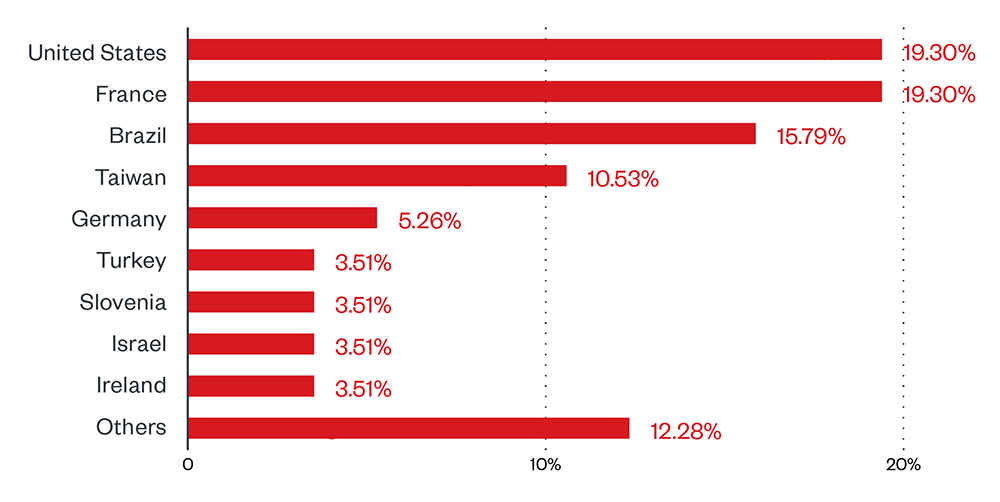
Our telemetry shows data on RansomEXX activity or attack attempts from March 31, 2021 to March 31, 2022. We observed RansomEXX activity from all over the globe, but the heaviest concentration was in USA in France followed by Brazil. The reason behind this observation is the 2021 RansomEXX attack on a major hardware manufacturer in Taiwan.
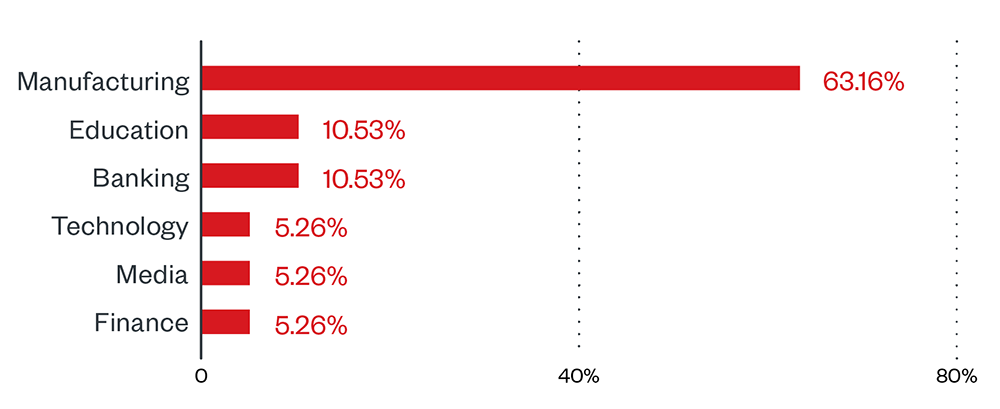
Based on our detections, RansomEXX was most active in the manufacturing sector, followed by the education and banking sectors. Overall, the differences are relatively slim given the small sample size.
Infection chain and techniques
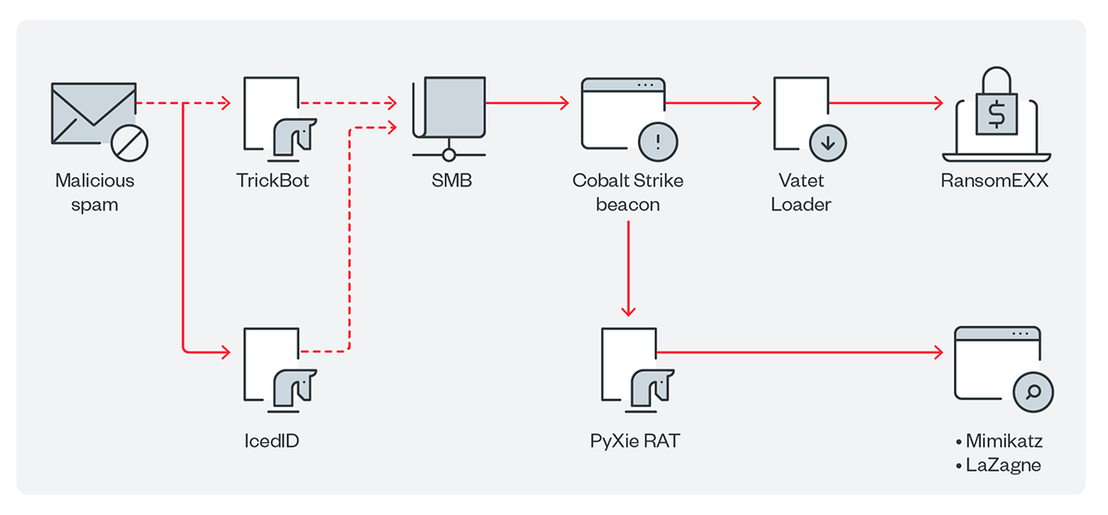
Given that RansomEXX operates on the RaaS model, its infection chain can vary depending on the target and the affiliate carrying out the various stages of the attack.

Initial Access
RansomEXX has been known to use Malspam to infiltrate machines and deliver multiple tools and related malware before finally deploying the actual ransomware payload.

Execution and Exfiltration
The threat actors make use of different pieces of malware for execution. From our telemetry, we saw IcedID, TrickBot, Cobalt Strike beacons, and PyXie RAT. These are known to be used in other campaigns as well. PyXie RAT also has the capability to exfiltrate data and obtain information from the target machine.

Lateral Movement
For lateral movement, multiple server message block (SMB) hits were seen on our telemetry. This has been used to deliver VATET loader.

Discovery
Similar to other campaigns, RansomEXX also makes use of Mimikatz and LaZagne to extract credentials from the target machine.

Impact
The deployment of the final ransomware payload ensures that files are encrypted in the machine.
RansomEXX encrypts files using advanced encryption standard (AES), while the AES key is encrypted using RSA encryption.
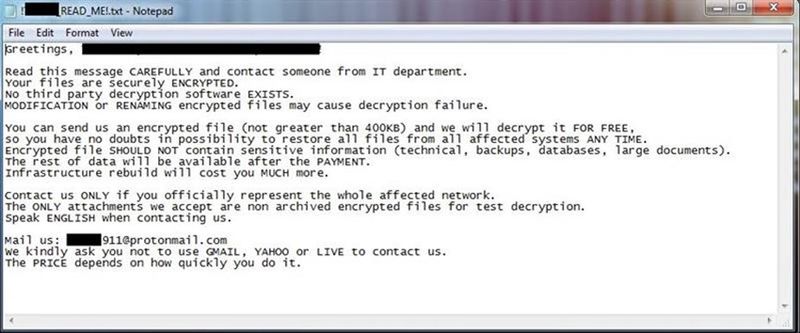
Figure 4. Sample ransom note

Other technical details
It avoids encrypting the following strings in their file path:
\windows\system32\
\windows\syswow64\
\windows\system\
\windows\winsxs\
\appdata\roaming\
\appdata\local\
\appdata\locallow\
\all users\microsoft\
\inetpub\logs\
:\boot\
:\perflogs\
:\programdata\
:\drivers\
:\wsus\
:\efstmpwp\
:\$recycle.bin\
crypt_detect
cryptolocker
ransomware
ProgramW6432
%ProgramFiles%
It avoids encrypting the following files with strings in their file name:
bootsect.bak
iconcache.db
thumbs.db
debug.txt
boot.ini
desktop.ini
autorun.inf
ntuser.dat
ntldr
ntdetect.com
bootfont.bin
!{Targeted Company Acronym}_READ_ME!.txt
ransom
ransomware
It avoids encrypting files with the following extensions:
.ani
.cab
.cpl
.diagcab
.diagpkg
.dll
.drv
.hlp
.icl
.icns
.ico
.iso
.ics
.lnk
.idx
.mod
.mpa
.msc
.msp
.msstyles
.msu
.nomedia
.ocx
.prf
.rtp
.scr
.shs
.spl
.sys
.theme
.thempack
.exe
.bat
.cmd
.url
.mui
.{Targeted Company Acronym
It terminates the following processes:
javaw
java
sage
ks_action
ks_email
ks_copy
ks_sched
ks_web
ks_im
ks_db
pvxiosvr
pvxwin32
xfssvccon
wordpad
wlmail
onenote
om8start
om8
ocssd
ocomm
ocautoupds
notepad
notepad++
node
nginx
ncsvc
ncs
mydesktopservice
mydesktopqos
mspub
msaccess
mongod
metiix
mdccom
mbarw
mail
i_view32
infopath
exchange
excel
encsvc
duplicati
devenv
dbsnmp
dbeng50
database
backup
atom
arw
agntsvcencsvc
agntsvcagntsvc
agntsvc
ARSM
AcrSch2Svc
Acronis VSS Provider
AcronisAgent
AcronixAgent
Antivirus
MSSQL$TPS
MSSQL$TPSAMA
MSSQL$VEEAMSQL2008R2
MSSQL$VEEAMSQL2012
MSSQLFDLauncher
MSSQLFDLauncher$PROFXENGAGEMENT
MSSQLFDLauncher$SBSMONITORING
MSSQLFDLauncher$SHAREPOINT
MSSQLFDLauncher$SQL_2008
MSSQLFDLauncher$SYSTEM_BGC
MSSQLFDLauncher$TPS
MSSQLFDLauncher$TPSAMA
MSSQLSERVER
MSSQLServerADHelper
MSSQLServerADHelper100
MSSQLServerOLAPService
McAfeeEngineService
McAfeeFramework
McAfeeFrameworkMcAfeeFramework
McShield
McTaskManager
MongoDB
MsDtsServer
MsDtsServer100
MsDtsServer110
MySQL57
MySQL80
NetMsmqActivator
OracleClientCache80
OracleServiceXE
TrueKey
TrueKeyScheduler
TrueKeyServiceHelper
UI0Detect
Veeam Backup Catalog Data Service
VeeamBackupSvc
VeeamBrokerSvc
VeeamCatalogSvc
VeeamCloudSvc
VeeamDeploySvc
VeeamDeploymentService
VeeamEnterpriseManagerSvc
winword
vmwp
vmware-vmx
vmms
vmconnect
vmcompute
visio
veeam
tv_x64
tv_w32
tomcat
thunderbird
thebat64
thebat64
teamviewer
tbirdconfig
tasklist
BackupExecAgentAccelerator
BackupExecAgentBrowser
BackupExecDeviceMediaService
BackupExecJobEngine
BackupExecManagementService
BackupExecRPCService
BackupExecVSSProvider
DCAgent
DbxSvc
EPSecurityService
EPUpdateService
ESHASRV
EhttpSrv
Enterprise Client Service
EraserSvc11710
EsgShKernel
FA_Scheduler
IISAdmin
IMAP4Svc
KAVFS
KAVFSGT
MBAMService
MBEndpointAgent
MSExchangeAB
MSExchangeADTopology
MSExchangeAntispamUpdate
MSExchangeES
MSExchangeEdgeSync
MSExchangeFBA
MSExchangeFDS
MSExchangeIS
MSExchangeMGMT
OracleXETNSListener
PDVFSService
POP3Svc
RESvc
ReportServer
ReportServer$SQL_2008
ReportServer$SYSTEM_BGC
ReportServer$TPS
ReportServer$TPSAMA
SAVAdminService
SAVService
SDRSVC
SMTPSvc
SNAC
SQL Backups
SQLAgent$BKUPEXEC
SQLAgent$CITRIX_METAFRAME
SQLAgent$CXDB
SQLAgent$ECWDB2
SQLAgent$PRACTTICEBGC
SQLAgent$PRACTTICEMG
SQLAgent$PROD
SQLAgent$PROFXENGAGEMENT
SQLAgent$SBSMONITORING
SQLAgent$SHAREPOINT
SQLAgent$SOPHOS
SQLAgent$SQLEXPRESS
SQLAgent$SQL_2008
SQLAgent$SYSTEM_BGC
SQLAgent$TPS
SQLAgent$TPSAMA
VeeamHvIntegrationSvc
VeeamMountSvc
VeeamNFSSvc
VeeamRESTSvc
VeeamTransportSvc
W3Svc
WRSVC
Zoolz 2 Service
bedbg
ekrn
kavfsslp
klnagent
macmnsvc
masvc
mfefire
taskmgr
synctime
sublime_text
stream
steam
sqbcoreservice
screenconnect
ruby
qbw32
pythonw
python
processhacker
powerpnt
postgres
php
outlook
oracle
MSExchangeMTA
MSExchangeMailSubmission
MSExchangeMailboxAssistants
MSExchangeMailboxReplication
MSExchangeProtectedServiceHost
MSExchangeRPC
MSExchangeRepl
MSExchangeSA
MSExchangeSRS
MSExchangeSearch
MSExchangeServiceHost
MSExchangeThrottling
MSExchangeTransport
MSExchangeTransportLogSearch
MSOLAP$SQL_2008
MSOLAP$SYSTEM_BGC
MSOLAP$TPS
MSOLAP$TPSAMA
MSSQL$BKUPEXEC
MSSQL$ECWDB2
MSSQL$PRACTICEMGT
MSSQL$PRACTTICEBGC
MSSQL$PROD
MSSQL$PROFXENGAGEMENT
MSSQL$SBSMONITORING
MSSQL$SHAREPOINT
MSSQL$SOPHOS
MSSQL$SQLEXPRESS
MSSQL$SQL_2008
MSSQL$SYSTEM_BGC
SQLAgent$VEEAMSQL2008R2
SQLAgent$VEEAMSQL2012
SQLBrowser
SQLSERVERAGENT
SQLSafeOLRService
SQLTELEMETRY
SQLTELEMETRY$ECWDB2
SQLWriter
SQLsafe Backup Service
SQLsafe Filter Service
SamSs
SepMasterService
ShMonitor
SmcService
Smcinst
SntpService
Sophos Agent
Sophos AutoUpdate Service
Sophos Clean Service
Sophos Device Control Service
Sophos File Scanner Service
Sophos Health Service
Sophos MCS Agent
Sophos MCS Client
Sophos Message Router
Sophos Safestore Service
Sophos System Protection Service
Sophos Web Control Service
SstpSvc
Symantec System Recovery
TmCCSF
mfemms
mfevtp
mozyprobackup
msftesql$PROD
ntrtscan
sacsvr
sophossps
svcGenericHost
swi_filter
swi_service
swi_update
swi_update_64
tmlisten
wbengine
MITRE tactics and techniques
T1078 - Valid Accounts
Like other human-operated ransomware families, it can arrive by brute-forcing weak remote desktop protocol (RDP) credentials
T1059.003 - Command-Line Interface: Windows Command Shell
Can be executed using cmd.exe
T1140 - Deobfuscate/Decode Files or Information
Some strings used, such as the strings that will be displayed on the console, are encrypted, and will only be decrypted when needed
T1562.001 - Impair Defenses: Disable or Modify Tools
RansomEXX stops services related to security software to avoid being detected
T1082 - System Information Discovery
It gathers the system's computer name, which it uses to create a mutex
T1049 - System Network Connections Discovery
It enumerates available network resources on the infected machine to look for files to encrypt; it does this by using the Wnet API's
T1083 - File and Directory Discovery
For its file encryption, it enumerates files and directories on each drive while avoiding safe-listed files or directories
T1486 - Data encrypted for impact
It encrypts files using AES encryption while the AES key is encrypted using RSA encryption
T1489 - Service stop
The ransomware stops services to avoid file access violations when encrypting files that are still being accessed
T1490 -Inhibit system recovery
Inhibits restoration of files from backup by executing the following commands:
- wbadmin.exe delete catalog -quiet
- bcdedit.exe /set {default} recoveryenabled no
- bcdedit.exe /set {default} bootstatuspolicy ignoreallfailures
- schtasks.exe /Change /TN “\Microsoft\Windows\SystemRestore\SR" /disable fsutil.exe usn deletejournal /D C:
Summary of malware, tools, and exploits used
Security teams can watch out for the presence of the following malware tools and exploits that are typically used in RansomEXX attacks:
- Malspam
- IcedID
- TrickBot
- PyXie RAT
- Cobalt Strike beacon
- Vatet Loader
- Mimikatz
- LaZagne
- SMB
- RansomEXX
Recommendations
RansomEXX is not as active as it had been in 2020, when its consecutive attacks made it one of the newer ransomware families to watch out for. However, being a highly targeted and human-operated ransomware, its attacks affect its victims and their reputation significantly. The combination of memory-based techniques, legitimate Windows tools, and post-intrusion contribute a lot to RansomEXX’s successes.
Preventing the attacks from the outset is key to avoiding the worst of ransomware campaigns. Organizations should learn from past RansomEXX campaigns and be vigilant against initial access tactics. Users should be wary of enabling macros, and of documents that prompt them to do so.
To help defend systems against similar threats, organizations can establish security frameworks that can allocate resources systematically for establishing solid defenses against ransomware.
Here are some best practices that can be included in these frameworks:

Audit and inventory
- Take an inventory of assets and data.
- Identify authorized and unauthorized devices and software.
- Make an audit of event and incident logs.

Configure and monitor
- Manage hardware and software configurations.
- Grant admin privileges and access only when necessary to an employee’s role.
- Monitor network ports, protocols, and services.
- Activate security configurations on network infrastructure devices such as firewalls and routers.
- Establish a software allowlist that only executes legitimate applications.

Patch and update
- Conduct regular vulnerability assessments.
- Perform patching or virtual patching for operating systems and applications.
- Update software and applications to their latest versions.

Protect and recover
- Implement data protection, back up, and recovery measures.
- Enable multifactor authentication (MFA).

Secure and defend
- Employ sandbox analysis to block malicious emails.
- Deploy the latest versions of security solutions to all layers of the system, including email, endpoint, web, and network.
- Detect early signs of an attack such as the presence of suspicious tools in the system.
- Use advanced detection technologies such as those powered by AI and machine learning.

Train and test
- Regularly train and assess employees on security skills.
- Conduct red-team exercises and penetration tests.
A multilayered approach can help organizations guard possible entry points into the system (endpoint, email, web, and network). Security solutions that can detect malicious components and suspicious behavior can also help protect enterprises.
- Trend Micro Vision One™ provides multilayered protection and behavior detection, which helps block questionable behavior and tools early on before the ransomware can do irreversible damage to the system.
- Trend Micro Cloud One™ Workload Security protects systems against both known and unknown threats that exploit vulnerabilities. This protection is made possible through techniques such as virtual patching and machine learning.
- Trend Micro™ Deep Discovery™ Email Inspector employs custom sandboxing and advanced analysis techniques to effectively block malicious emails, including phishing emails that can serve as entry points for ransomware.
- Trend Micro Apex One™ offers next-level automated threat detection and response against advanced concerns such as fileless threats and ransomware, ensuring the protection of endpoints.
Indicators of Compromise (IOCs)
The IOCs for this article can be found here. Actual indicators might vary per attack.